In past issues we’ve explored a variety of composition principles including utilizing negative space, creating visual tension, and of course, the ubiquitous ‘rule of thirds’. As framing your subject has as many possibilities as one’s imagination allows, moving beyond the rule of thirds would seem child’s play; however, some choices are better than others, and fortunately for us, there are additional guides for us to follow.
Golden Ratio
While much has been written about the golden ratio being precisely expressed everywhere in nature, the Fibonacci Sequence etc. (most notably by Dan Brown in The Da Vinci Code), that’s generally a bunch of malarky… lots of things are close, but no cigar. Still, there are certainly tons of examples of its utilization we can point to which well illustrate its aesthetic properties.
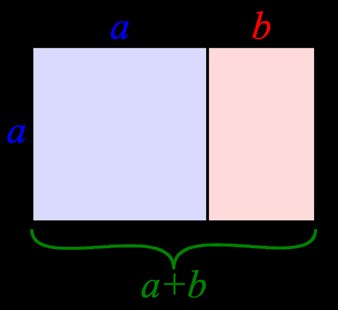
Similar to the rule of thirds (in that the rule of thirds is essentially a simplistic model of it), the golden ratio divides an image into sections wherein important image elements may be aligned to produce aesthetically pleasing compositions. Originally documented by Euclid (325-265 B.C.), and probably in conscious use for over 200 years in advance of that, the golden ratio (also known as the golden mean, golden section etc.), is derived from a mathematical equation which essentially says for example, that when you take a rectangle, create a square within it using the length of one of the rectangle’s sides for its measure, and the remaining rectangle has the same ratio of length to width as the original rectangle, you have created a shape conforming to the golden ratio. Calculated at 1.618 and represented by the Greek letter Phi, this aspect has been used extensively by artists over the centuries to great effect.
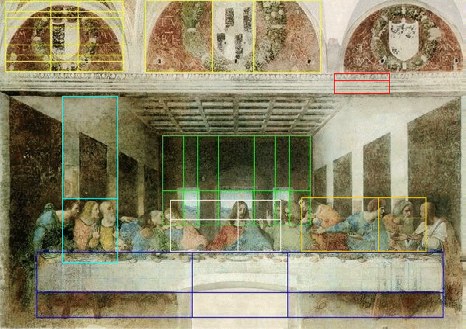
Speaking of Da Vinci, take a look at all the instances of the golden ratio’s observances in ‘The Last Supper’. Clearly the artist was well acquainted with its aesthetic appeal, and generously applied the ratio’s properties to his work.
The Golden Spiral
Directly derived from the golden ratio, the golden spiral is a logarithmic curve which uses its parent ratio to determine its increasing width every quarter turn. Um, who cares? Unfortunately, many images don’t lend themselves well to formal layout via the intersection of straight lines — particularly organic shapes (think flowers, nautilus shells, fiddleheads etc.), so the spiral allows you to still utilize its parent golden ratio, simply expressed as a curve. Other incarnations of the golden ratio include the golden triangle, which too may be used to guide our artistic vision.
Centre Placement
If you are to believe the vast majority of tutorials on photographic composition, you’d be certain that placing the subject in the centre of the frame is anathema. While generally it is true that most subjects will aesthetically benefit from an off-centre composition, there are many occasions where a centre placement is exactly what’s called for. For example, instances wherein you wish to emphasize symmetry (often found in architectural work), it is frequently a great idea to employ this framing — particularly should you also use a square crop to further highlight your compositional objectives.
Similarly, if you wish to express the notion of a vast expanse, the emotion of loneliness, a challenging landscape, or the insignificance of man versus nature, a centre placement of subject matter within the frame will assist in achieving those objectives. All of these ideas could be contained within one image depicting a small human subject in the middle of a wide-angle landscape shot… particularly if their back is toward the lens.
Real Life Use

Ok, well that’s great and all, but how am I to go about using these examples in my day-to-day photographic work? While many cameras ship with the option of displaying an overlay in the viewfinder which conforms to the rule of thirds, you won’t find the other options available to you. Therefore, when framing your subject you will need practice in estimating your framing to take advantage of them in-camera.
Fortunately however, a good deal of composition work in photography happens after the fact in terms of cropping your image to achieve a pleasing photo, and your RAW editor may well have tools to help you here. If you are a Lightroom user for example, while in the Develop module, select the crop tool and from under the ‘Tools’ menu, select the ‘Crop Guide Overlay’ item. From here you can see many options including Grid, Thirds, Golden Ratio, Golden Spiral, Diagonal, and Aspect Ratios. You can cycle through them by hitting the ‘O’ shortcut when you have the Crop tool selected. Further, you can choose from which options you normally like to include within that cycle by selecting the ‘Choose Overlays to Cycle’ option from that same menu.
This makes life considerably easier and exposes you to compositional possibilities you mightn’t have thought about while shooting the image in the first place. You’ll certainly come to discover that many a ho-hum image can be dramatically improved by judicious use of the crop tool (see our Creative Cropping guide in Volume I for more on this!).
So while you needn’t feel constrained by the rule of thirds, or even the other options presented above, knowing the ‘rules’ (and when to break them) definitely enables the photographer to improve their craft, resulting in images that transcend the snapshot, entering the world as creations your audience can embrace as art.