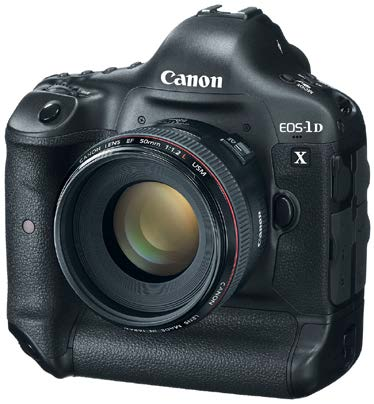
So we’ve covered Nikon’s pro body, the D4; what has Canon got as a response? Why, the EOS 1DX of course. How does it stack up?
Well for starters, while both cameras feature a full-frame sensor, the 1DX trumps the D4 in terms of effective pixels: 18.1 million versus 16.2 million respectively. Not only this, but the autofocus system sports 61 autofocus points compared to Nikon’s 51. For many this won’t be a huge difference; however it does afford the photographer some extra flexibility and speed in selecting a focus point — avoiding the need to focus and recompose as often. On the other hand, the D4 does offer DX mode which allows the shooter to take advantage of the crop factor — useful in wildlife and other telephoto photographic pursuits.
The real difference in the autofocus capability however lies in the fact that the D4 can focus down to f/8, whereas the 1DX is constrained to f/5.6… meaning that you’ll lose autofocus functionality when using a teleconverter on a number of long lenses. For some this isn’t an issue, while for others it’s a clear advantage for the D4.
While in past battles have been fought over ISO capability, both companies seem to have pretty much nailed it over the last couple of years. With a range of from 50 to 204,800, both bodies are extremely capable in this area, and provide low noise imagery across a wide band of that range.
So who wins in the battle for sensor and autofocus capabilities? It really depends on your needs: 10 more focus points and an extra couple of megapixels will tip the scales in favour of Canon for some, while DX mode and autofocus functionality at f/8 is a definite win for others. We’ll call it a draw.
Memory
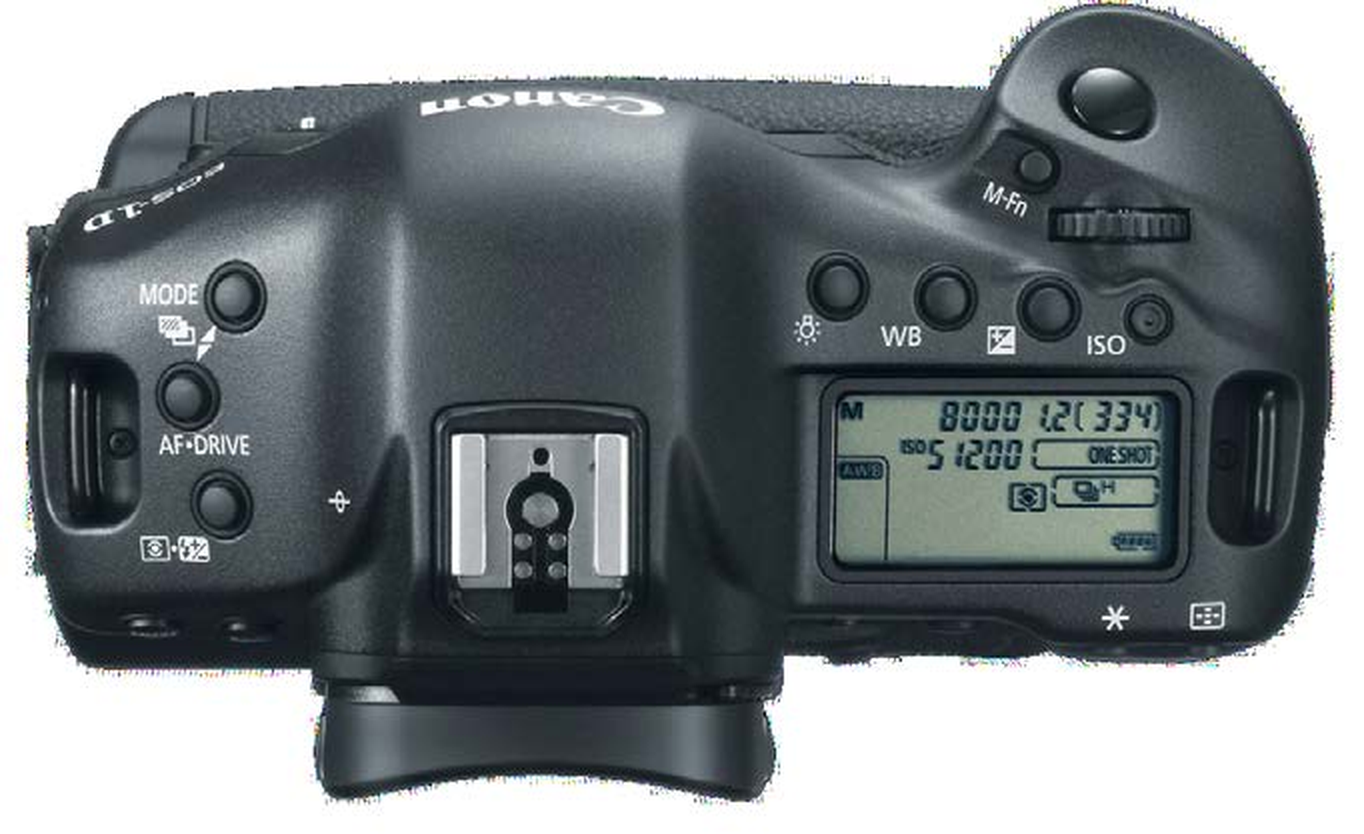
Canon’s 1DX supports high speed UDMA 7 Compact Flash cards, but unlike the D4, has refrained from including XDC compatibility, instead, providing two CF slots. As discussed in the D4 review, until this technology has proven itself in the marketplace, we aren’t certain as to how good a decision it is to have included it within Nikon’s flagship DSLR body; however, we’d be happy to be proven wrong. For us, here it’s advantage Canon.
Video
While once the province of point-and-shoot and dedicated video cameras, the ability to capture professional grade video on a DSLR was introduced by Nikon with its revolutionary D90, and Canon has been scrambling to match feature for feature ever since. So how does it fare this time around? The 1DX is certainly a very capable video capture platform supporting up to 1080p at 29.97fps as well as a number of other modes. What is interesting is that it automatically starts a new recording after 4GB of video has been captured (about 1/2 an hour). While this is a ‘nice to have’, most production video shoots don’t go anywhere near this long for a single sequence. It may well be appealing to the more casual video shooter however, filming a school play or sporting event, and so is well worth mentioning. The powerful Digic 5 processor on-board the 1DX is also helpful in reducing video noise Canon claims.
Nikon’s multi-area mode on the other hand provides three different crop formats: full-frame FX format at 16.2MP, DX mode for long range crop shots, and 1920×1080 crop mode for when you just need to get in a little tighter on an extra long shot. Of course all convert to full 1080p video. These formats produce not only different crops, but depth of field effects as well. For the extra flexibility afforded by Nikon’s offering, we give the nod to them in this category.
Shooting Speed
Sports photographers will definitely appreciate Canon’s snappy (excuse the pun) performance! At up to 12 frames per second in normal mode and 14 in Super High Speed mode, the 1DX will satisfy even the most demanding photog’s requirements for lightning fast image capture. Compared to Nikon’s max of 11fps, Canon clearly comes out on top here. Note however that in order to achieve these speeds, you’ll need to use a UDMA 7 compact flash card that can handle these bursts.
Ergonomics
The body of the 1DX hasn’t changed much over its predecessors — some things have been shifted slightly to accommodate a new mini joystick, and Canon have redesigned their menu system to be more user-friendly, but essentially it’s the same rock-solid design one expects to see for the company’s flagship camera. Nikon on the other hand has added two mini joysticks and ensured that the control layout is exactly the same whether the camera is in portrait or landscape orientation — a huge plus for us. Not only that, but button illumination in low light is an excellent addition to the D4 feature lineup. While we think Canon’s design is excellent, we’ve always preferred the attention to ergonomic details that Nikon is famous for. Advantage Nikon.
Pricing
While price at these thresholds isn’t a primary concern, the difference between the two is frankly fairly startling. At a street price of $6799 for the 1DX, it’s a full $800 more expensive than its rival. That’s a 12% price differential, and certainly not insignificant. Obviously we feel the Nikon comes out the clear winner here.
Conclusion
While we could go on all day comparing feature for feature, if you’re really in the market for a pro-grade DSLR, you most likely already have a significant investment in gear from one or the other manufacturer. So whether you are buying a D4 or 1DX is a decision that has already been made for you. The question here should rather be “is the 1DX a worthy successor to the 1D and the rest of Canon’s pro line?” The answer is a resounding yes! This is by far Canon’s best effort to date, and we look forward to even more fantastic offerings from this photography titan in future!