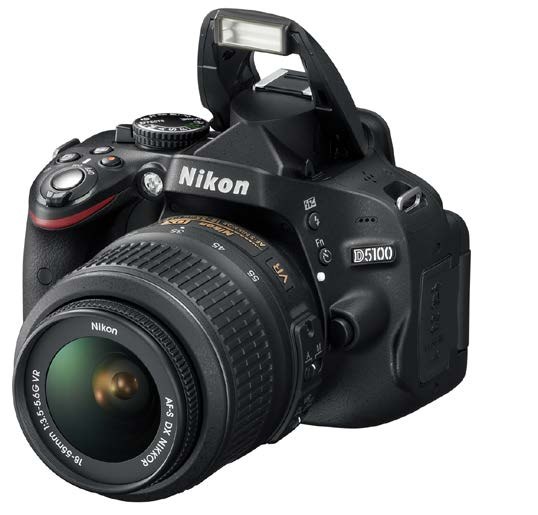
Last issue, we reviewed Nikon’s full-featured intermediate DSLR, the D7000; this time around we take a look at its new baby brother, the D5100.
First Impressions
The company was kind enough to send us the full kit, including the 16.2 megapixel camera featuring full 1080p HD video, and accompanying 18-55mm f/3.5~5.6G VR lens. Upon opening the box, we were greeted by what has become pretty much expected in terms of form factor for a consumer level DSLR: compact size, rugged plastic and rubber construction, and primary controls including a variety of canned exposure settings in the form of scene modes, and effects such as selective colour, silhouette, high-key, low-key, and so on. No surprises there.
What was immediately obvious as new over its predecessor the D5000, was the addition of a lever beneath the mode dial which shifts the user into Live View mode upon activation, borrowed from the D3100. We found this a very intuitive addition and would expect to see it make its way into future designs. What would make this even more effective would be to incorporate it into a body which allowed for viewing video through the lens instead of having it displayed on the rear LCD. If you are going to have to look away from the viewfinder anyway, a standard button on the back of the camera to activate Live View isn’t that much more difficult to navigate than a lever. If shifting between still photography and video while looking through the viewfinder however, this addition would be welcome indeed.
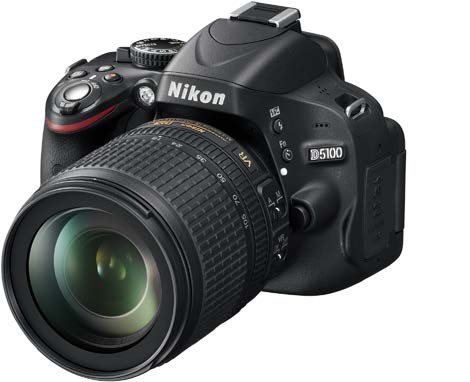
Speaking of the screen, again we expect great things from Nikon, and they seldom fail to deliver. The 3 inch, 920,000 dot (wow!), 180 degree tilt and swivelling LCD is bright, well organized, and automatically shifts display orientation depending on whether you are holding the camera in portrait or landscape mode. We were a little confused at first when we found two separate buttons (both the ‘i’ and the ‘info’) activated the display. It turned out the former allowed you to not only view, but edit the settings with a second press of the button, while the latter was more for Live View mode, and allowed you to display three separate screens: grid, uncluttered, and shot info — handy.
The feel of the camera is again standard fare for Nikon’s consumer line: lightweight, ergonomically sound, with straight-forward control layout, and lots of hand-holding features for the novice. The buttons themselves are all one size: small. We found this a little hard to get used to as our reviewers have large hands and are more accustomed to Nikon’s pro bodies; however, after a few hours of experience, the initial difficulties became less problematic.
Kit Lens
While the price of the complete kit is certainly attractive, we really wouldn’t bother with the kit lens if you are at all serious about improving your photography. It will deliver acceptable wide angle and short range portraits when paired with the cropped sensor included in the D5100; however, don’t expect magic. Your money is much better spent on a fast prime lens like the 50mm f/1.4 or 1.8. These lenses are reasonably priced (especially the 1.8) and will last you a lifetime. And really Nikon? Do we really need VR in an 18~50mm lens when paired with a camera that handles high ISO settings with ease? I’d have much rather seen better optics in a kit lens than the vibration reduction Nikon seems to be including in every new model.
The focal length of the kit zoom isn’t particularly versatile either; and at the long end where you’ll find yourself using it a lot, f/5.6 is pretty limiting. At the wide end, there is also a significant amount of barrel distortion, which is nicely cleaned up in RAW processors such as Adobe Lightroom however. If you are willing to sacrifice aperture for zoom/portability, you really should take a look at the Nikon 18-200mm which shares the same variable aperture characteristics and yet has an extremely useful focal range. Mind you, at $799.99 USD, it may well be more than you’re looking to spend to pair with an entry-level DSLR.
Still Photography
The purpose for most when buying a new camera is to enable the capture of great still imagery with good colour fidelity and clarity. While the 16.2 MP sensor included in the D5100 shares its heritage with the D7000, the accompanying autofocus system is worlds apart. With 11 focus points, with only one cross type sensor, the camera doesn’t hold a candle to its older brother with 39 and 9 respectively. In our initial tests shooting moving subjects, we had real difficulties in nailing the focus at wide apertures. While the focus was often close, it failed more often than not in achieving critically sharp images at the point in the scene we had selected. With slowly moving or stationary subjects, the camera fared better, and for most folks just getting their feet wet with a DSLR, the focus system would seem adequate.
Also, while on the topic of autofocus, it should be mentioned that the D5100 does not include a built-in motor, which will limit the types of lenses you may use to AF-S types and rules out many older AF models from Nikon’s extensive lineup… unless you wish to use manual focus.
Colours are rendered slightly saturated; and this is probably Nikon’s decision due to a large portion of the entry-level DSLR market being composed of new parents. Kids look great in vibrant hues, and novice DSLR owners generally want their colours to really pop. This desire however generally wears off after a while as photographers gain more experience.
Like the D7000, high ISO performance is excellent, with visually pleasing monochromatic noise in the shadows and low levels of colour noise. The camera even includes a ‘Night Vision’ setting which puts the camera in greyscale mode at high ISO, permitting both very low light still images and video at a surprising level of quality for such an inexpensive unit. This feature however is again somewhat limited given the camera’s tendency to frequently hunt for focus in low light situations.

Video Performance
Capturing full 1080p video at 30 frames per second, the D5100 bests the D7000 in that the latter will only do 24 fps. Additionally, the articulated screen swivels out to the side instead of downwards as is the case with the D5000. This may seem like a small detail, until you attempt to get the full range of motion out of your screen while your camera is mounted on a tripod — then the reasoning behind this design change becomes apparent… nice job Nikon.
Video quality is quite decent, with no discernible hiccups other than the focus issues mentioned earlier. That is to say, capture is very smooth until you enter one of the many effects settings which creates considerable stutter and lag in Live View, making it sometimes difficult to frame your intended subject. That being said however, there are some rather cool effects included such as the miniature mode which makes them well worth exploration.
The camera also features inputs for a microphone, GPS unit, outputs for HDMI, as well as a USB interface. The addition of the microphone input is definitely welcome, as the built-in unit, though improved, is quite sensitive to wind noise and is less than ideal in terms of audio capture; however for most situations it is certainly adequate.
Conclusion
So is the D5100 the right camera for those looking to make the leap between point-and-shoot and DSLR? Granted the unit is priced right, ticks off a lot of boxes in the desired features column, and is definitely easy to gain proficiency with for the novice. The manual is extremely good and introduces a lot of core concepts in plain language with excellent illustrations. On the other hand, the limitations inherent in the body may become more glaringly apparent as the neophyte photographer subsequently advances in their knowledge and ability.
If price is a primary consideration, then we’d definitely say that the D5100 is a lot of camera for the money; and you will likely be fairly happy with the results you can achieve with it. If however, you can afford to spend a little more, we’d strongly recommend the D7000 over this body; as it will serve you well for many years to come and provide a much better learning platform — with room to grow into. I am reminded of the old saying “It is always better to spend a little more than you had planned, than a little less than you should.” This sentiment certainly resonates with us in this case.