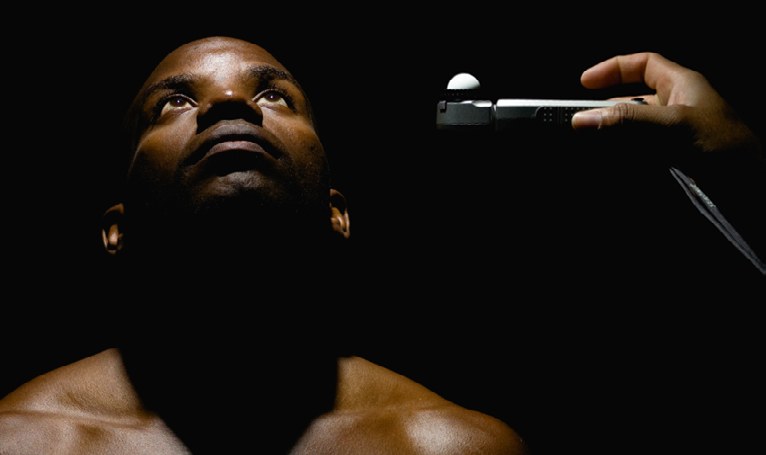
Once upon a time, for the professional photographer certainly, there was no question as to whether you would utilize a light meter in support of obtaining a correct exposure for one’s captures — it was simply an essential. Nowadays however, with the advent of digital, and in-camera metering systems that are so dramatically superior to what was previously available, many opt to forego this step. Is this the right choice?
Studio Stress
I’m certain those of you who are familiar with the studio environment, will be acquainted with the lengthy process involved in getting the lighting setup just how you’d like it — often requiring tiny, time consuming tweaks while your model stands around bored. Well, of course the solution to this is to do as much to prepare for your subject in advance. What about exposure though? As you aren’t 100% certain what your particular model’s skin is going to do under your lights, do you fire a bunch of test shots and make adjustments between them?
We believe what separates the truly professional from those merely aspiring, is the ability to a) make their subject comfortable in order that they are able to provide their best, and b) take as little of their day as possible. Models these days expect some measure of tweaking; however, spending a bunch of time with your equipment versus them can have an effect on their performance. If they don’t feel you know what you’re doing (and the longer you take, the more they’ll believe this), they’re going to be less comfortable, with the attendant result being poorer posing. Additionally, spending the larger measure of time on them versus adjustments, makes them feel appreciated — ultimately yielding a superior end product.
So where does the meter come in? Utilizing one allows you to nail your exposure… the first time, every time. There’s no guessing and making adjustments; trust it and you’re golden. This is of course a huge time saver, especially between shots where you’ve altered the lighting setup. So, using a meter helps with both a) and b). Further, despite what many believe, hand-held meters are more accurate than those included in cameras.
Accuracy Counts
There are those that believe ‘chimping’: checking the camera’s LCD to evaluate exposure and composition; viewing the histogram; and looking at ‘blinkies’ to determine whether they’ve blown highlights, is all that need be done to ensure an optimal capture. There are three problems with this strategy: it relies on evaluation post facto, it is time consuming, and its results are less predictable.
In the first case, blowing your first exposure or two, only to correct on the subsequent ones is fine assuming the content of those latter images in terms of composition etc. is superior to the former. What if the best shot, aside from exposure, was your first one? Well you’ve blown it… and fleeting moments are generally not repeated. Additionally, if you’re shooting people, you’ll tend to get less genuine expressions on their faces, the more shots you have to take. What you’re generally after are those zygomatic smiles… forced, fake ones just don’t cut it; and that’s exactly what you’ll be getting after a few retakes.
Secondly, instead of taking one shot, nailing it, and moving on, chimping is not only wasting your subject’s time, but your own. It could well be the protracted interval you’ve spent on capturing one image is responsible for your missing another, perhaps superior photographic opportunity that occurred shortly thereafter. This isn’t to say that you can always meter in dynamic situations where lighting conditions are changing and events are happening quickly; however, if you’ve established exposure baselines for areas of the room in advance for example, you can determine if your in-camera meter is making sense in advance of shutter release, and adjust your exposure compensation accordingly.
Finally, in-camera meters use light reflected by your subject, instead of directly measuring the light falling upon it, as is the case for the hand-held variety. Matrix, the metering mode most commonly utilized by photographers (by an order of magnitude), then compares what is being read to a database of thousands of images the camera has stored within it to determine which most closely matches, and adjusts the exposure accordingly. For the most part, this works surprisingly well; however, for tricky lighting situations such as those with a high dynamic range, or conversely, low-key captures, you’re often forced to reshoot, as the on-board meter hasn’t correctly determined your intent, and has delivered an incorrect exposure. This often leads the photographer to switch to either centre-weighted or spot metering for a second attempt — again wasting time and creating the problems as outlined above.
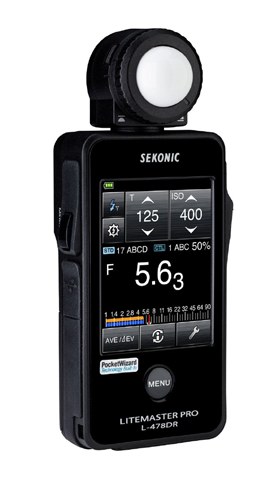
Incident meters on the other hand provide an accurate measurement of the light falling on your subject and provide you with perfect exposure settings every time. As you’ll see in our review of Sekonic’s new L-478DR meter elsewhere in this issue, a meter can sort out all kinds of difficult situations your in-camera meter will have problems with. So while they won’t improve your composition, skill in arranging light sources, or taste in model selection, meters can definitely give you an advantage in the studio and out, and is why we recommend their usage wherever practical.