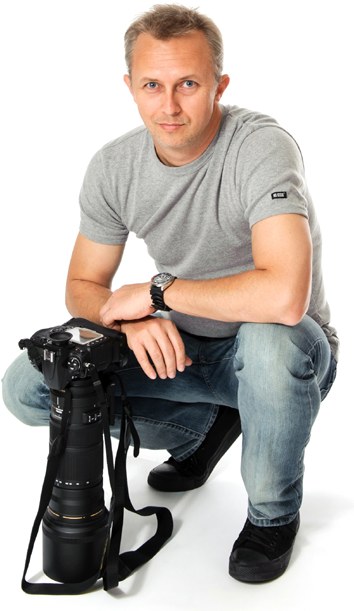
DP: Hi Dallas, why don’t you start us off by telling us how long you’ve actually been involved in photography?
Dallas: I’ve been taking photography seriously since about the year 2000. I’d always been interested in photography since I was a very young child, probably about the age of 8 or 9; but we grew up in kind of a poorer environment than most people do, and cameras and things like that were kind of a rich man’s pursuit in those days for most people. Obviously there was no such thing as digital back then; but SLRs were kind of the rich man’s toys that we encountered in our environment.
My parents bought me my first camera probably when I was about 13 or 14 years old. It was a Canomatic… I don’t even think it was 35mm, I can’t quite remember. I spent quite a bit of time using that camera and my parents ended up taking it with them on an overseas holiday, and when they came back, it was broken. It was the last camera I had for quite a long time, until about the year 2000. Then I picked up a Nikon F60 — which in the States I believe was called the N60 — sort of the entry-level model, and that was where it built from. Initially I hadn’t really intended getting as deeply into it as I have become, but somebody gave me a lens, and it was a little bit better than the kit lens that I had on the camera. Once I saw the results of that lens, I started thinking ‘Wow! Now I can start understanding and appreciating how this whole photography thing comes to be.’ So it all sort of snowballed from there. One lens led to another; another camera body led to another; and the next thing you knew I had started a website all about Nikon equipment. So that’s kind of how it began for me.
DP: And that’s of course NikonGear.com originally, correct?
Dallas: Correct, yes.
DP: Ok, now, can you tell me a bit about how that site came into being? At one time, you were an active member of NikonCafe.com I believe…
Dallas: I was. Actually, the NikonGear site started in 2005… I think that’s when I first registered the name. What actually happened is quite interesting: I went to a book sale, and I came across a book in which the author had catalogued just about every Nikon body and lens that had been produced from the inception of the company up until the time of print. It was a fantastic resource and I thought “Wow, this would be good to have something like this online!” So that was the original intention: to produce a website that had as much information about the Nikon cameras and lenses that one could possibly get hold of. So I started it off like that… and I’d been involved in forums for quite a long time, but not on the actual browser type forums — more on the Usenet forums, which was where I got my whole grounding with how forums organically become communities online.
What happened was, I wasn’t really active on the NikonCafe website, but I think at that time — mid 2006 if I recall correctly — there was a bit of a spat there. I had at that stage started investigating forum software and I knew nothing about it. So I basically figured out how to install — and I don’t even recall what version of software I was using… some sort of an open source software system. A lot of people were very unhappy with what had happened at NikonCafe…
DP: Do you recall what the nature of the spat was about? Because I think that’s actually quite important to differentiate your community from others.
Dallas: Yeah. It was all surrounding nude photography.
DP: So artistic nudes essentially?
Dallas: Yeah. The owners of NikonCafe basically had taken a decision to not allow nude photography on the site anymore. That obviously annoyed quite a lot of their regular members who had been posting nude photography for quite some time — tasteful nude stuff, you know, nothing pornographic in nature. So, what I did was (and I contemplated this for quite a long time, as I wasn’t really sure what the outcome would be), I private messaged about 15 to 20 of the members who had expressed outrage at the fact that they weren’t allowed to post nudes anymore; and I said to them, “Well, I’ve got this website, and I’ve just put a forum on it. Maybe you’d like to join that, and you can post your nude photos without any problems.”
The next thing I knew, there were just hundreds of people joining up on the site; and from there, it just became pretty much a lot of work for me, keeping it all in check. Over the years we’ve grown from the original hundreds of members to over 12,000 members. Not so many of them are always active all the time, but what I find quite interesting at NikonGear.com is that we have a huge amount of people that just lurk — they don’t post anything. You find there’s a core group of people who are producing a lot of the posts most of the time. I’d say it’s almost a 10 to 1 situation where you’re having 1 person active on the forum for every 10 who are visiting and not active if that makes sense.
DP: I’d say that’s probably true for most forums, where people come in and consume the content, dip in and dip out. Certainly, not to take anything away from NikonCafe — I think they’re a great site; they’re just more family oriented, and they want to prevent people from stumbling across some content that might not be appropriate for young children. However, for photographic artists it seems that the nude is a fairly common subject, and is in all the studies that you’d be doing at photography school. So, for me the whole issue of censorship kind of stuck in my craw a little bit, and that’s actually why I joined the site originally back at the time that the ‘spat’ as you call it transpired.
DP: So, aside from this, what would you say sets your website apart from other photography forums?
Dallas: That’s an interesting question. I’ve tried to analyze that for years, and I still can’t quite put my finger on it. I think if you look at it, it tends to be more of a mature audience than you’d find at most other photography websites. The average age of the active membership is generally over 40, which I think has made quite a difference in terms of the need for things like moderation. We hardly ever use our moderation system. I think in the seven or eight years that we’ve been running for, moderation has been so limited that, when somebody posts something in the moderation forum these days, it’s almost like there’s a panic — what’s happened?! Generally, the audience is more mature; they’re a lot more widespread than you’d find on a lot of other photography forums…
DP: You mean geographically?
Dallas: Geographically, yes. We have members from all over the world. The split is actually quite unique in that it’s predominantly European these days. That’s changed a lot over the last year or so. Previously I’d say it would have been about 60% American, or North American to be more precise, and then about 30% from Europe and surrounding countries. I also have quite a large group of people from Australia these days which is great! Interestingly, in Africa, there’s very few of us; and that’s where the site originates.
DP: Well, I’m certain you’ll get more indigenous members as time goes on! So, maybe you can tell me: you still type in NikonGear.com, but you’ve made a transition to Fotozones.com… can you tell me what was involved in that evolution?
Dallas: Ok, NikonGear is obviously a brand name; one of the problems I’ve had for a long time with the site is that I don’t want it to specifically be about one brand — the forum aspect that is; the Nikon aspect will remain the same. We want to keep that information out there; we want to make sure that people are making informed decisions on what equipment to buy. I also think that keeps the manufacturers on their toes as well; because we don’t want the manufacturers to start pushing rubbish that nobody is going to make good use of. So I think in those terms it’s great. From the actual branding point of view on the forum side, I’ve always wanted to have a more generic approach to open discussions. A lot of the content on the website isn’t really around Nikon at all…
DP: Well what kind of content is there?
Dallas: Well, a lot of the image sharing that people are doing on there — that’s the bulk of the website at the moment. It puts a lot of people off when they see a site called NikonGear.com and they want to share photos and stuff like that to an audience that is quite advanced in terms of how they view their photography, and how seriously they take their photography. Also the ‘Gear’ name… the gear aspect of it is really non-indicative of what we’re trying to accomplish with the site, which is to create an online community that discusses pretty much anything related to photography, not necessarily the gear.
Fotozones is kind of difficult to put into words… it’s a branch out. The way I explained it to one of our guests on Safari last year was: if you can imagine NikonGear as being a part of the greater site. So Fotozones.com would be the umbrella site, and within that umbrella we’re going to have things like the NikonGear website and I’ve also introduced another ‘zone’ specifically for micro 4/3 and mirrorless cameras. We’ll have a technical zone, and we’ve got a travel zone as well which is obviously a huge part of what I’m doing.
On Safari
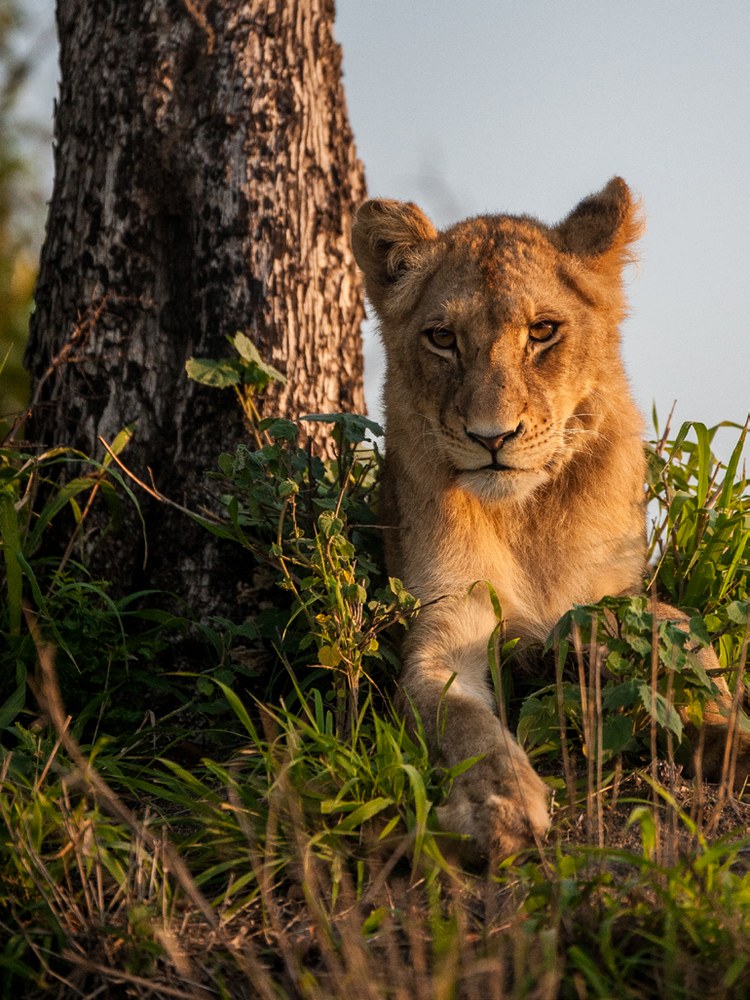
DP: Ok, well you’ve just mentioned the Safaris; maybe you can tell me a little bit about that. Certainly you’re living in Africa, and of course there’s a big interest in taking Safari there — photographic or otherwise — but how did it end up that you got involved?
Dallas: Well, photography safaris have always been an interesting thing for most photographers; people want to get out and actually use their cameras for more than just taking pretty snapshots. What better way to do that than to go see really wild African animals? It just made sense for me to do it. So, what we’ve got are several game reserves in South Africa that are very accessible to me, but the problem of course is that you can have the access to the game reserves, but putting an actual safari together is a little bit more involved than that. There’s all sorts of legal aspects; and for that specific reason, I don’t personally do any of the organizing. I’ve contracted a very nice person named Pepe Jones who does all of that for me. She’s got all the necessary licenses and qualifications, and a fantastic tour guide. What I do is say, “This is where we want to go… that’s what we want to see…” and she organizes everything for us.
DP: Well that sounds great! Now, take me through a typical day on safari with your company…
Dallas: Well it depends on where we’re going. The first safari that we did in 2009 was entirely different than the one that we’re doing these days. We did pretty much a road trip from my hometown, Durban, and we drove for nearly 4000km between where I live and Johannesburg. So we took in a huge amount of different attractions along the way. That safari was kind of a huge learning curve for me. The difference between what we’re doing now and what we did back then is huge.
The safaris for instance in the Sabi Sands that we’re putting together, those are really done for a specific purpose. So for instance on the first safari we did everything from landscapes, to wildlife, to cultural stuff; whereas now we’re much more specialized. For instance, the ‘Big 5’ safari happens in a specific area with people who are really specialized and able to provide us with the best opportunities to photograph the big 5.
DP: And for our readers, the big 5 being?
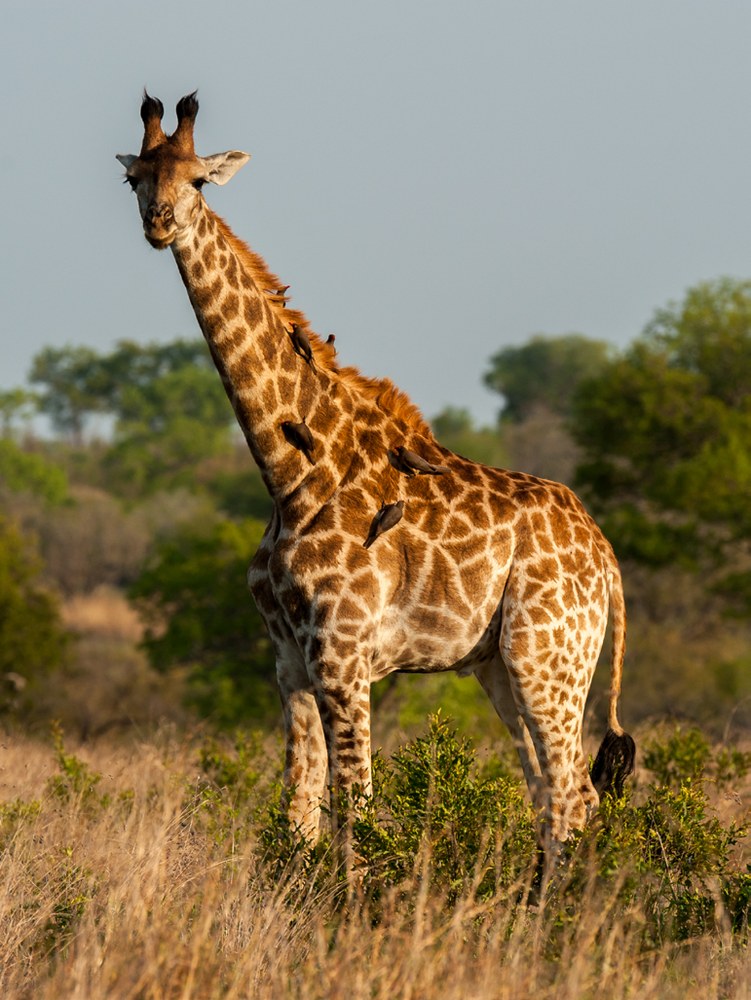
Dallas: The big 5 are the large African animals; so your lions, your leopards, rhinos, elephants, and buffalo. That’s what’s known as the big 5. When you go to the park game reserves like Sabi Sands, your access to those animals is, from a photographic point of view, a lot better than you’re going to get from the national parks. In the national parks you can’t go off-road. So if something is happening 200-300 metres from the road, you’ve got to sit there and watch from either a pair of binoculars, or obviously using a really, really super telephoto lens. The difference with private game reserves is that if something happens off-road, your rangers are able to take you right there to where the action is. So you’re literally within an arm’s-length distance from what’s happening. On the last safari that we did, we came across a lion kill — they had taken down a buffalo — and we were literally 4-5 metres away from where these animals were devouring this buffalo. That’s the kind of experience that you just really don’t get in a national park.
DP: Oh, I’m sure! What kind of people do you get coming for your safaris?
Dallas: We get great people coming on our safaris! You know one of the most enriching aspects of what I do, is actually meeting people from all over the world who have got one specific common interest, being photography, and being able to show them what Africa has to offer has been really such a fulfilling experience.
DP: Is there a typical age group, or level of fitness that’s required?
Dallas: No, not at all. We’ve had young people that have been in their 20s and early 30s, and most recently we had people that were retired and in their 60s. One of our safari people that have come on every safari we’ve done is a lady from New York, and she’s just recently turned 75! You’ve never met a more energetic person in your life. On our first safari, she was walking across suspension bridges with us carrying a 200-400mm lens… so yeah, she’s got real spirit.
DP: Well, speaking of gear, what would you recommend people bring on your safaris?
Dallas: Well, it depends on what you’re after. If you’re coming on the Big 5 safari, you really don’t need huge telephoto lenses; but the 200-400mm seems to be the most popular choice for most of the Safarians that come out. Excuse me, just to backtrack, we call them Safarians; that’s just a nickname we’ve come up with for them. A lot of them have arrived with 200-400s; you don’t really need anything more than that. A 70-200 is probably more than adequate when you’re doing a Big 5 safari, because we get you in so close to the action. Recently, on the last safari, I used a Sigma 120-300mm f/2.8 which I reviewed on the NikonGear website and it’s really an excellent lens; I can highly recommend that, because the 200-400mm is out of reach for most people’s pocketbooks.
DP: Now are they going to need a tripod, or are there places to mount your gear in? I assume you use Jeeps or Range Rovers?
Dallas: In the private reserves, they use a Land Rover, which is an open vehicle with elevated seating behind the driver’s seat. So for instance, you’ve got three rows of seats, and we only allow 2 people per row. Generally it would be better if you came on your own on safari, because each suite that we sell on safari has a row of seats. So if you’re occupying the suite on your own, the entire row of seats is yours, and you can switch from one side to the other. As far as camera support goes, what we’ve found is the best thing is a monopod. You can clamp that to the bar in front of your seats, but what Sabi Sabi, the place that we stay at have done is mounted arms on those bars that you can swing and attach a Wimberley head on to. So, you’ve got quite a few options in terms of mounting the camera and the lens.
DP: Ok, and how long are these safaris typically?
Dallas: The Big 5 safari goes on for a week; and that’s an entire week where we drive around in the mornings and in the evenings for two to three hours at a time, and most of the people who have come on that trip have said that a week is long enough. Every day in the bush presents something new and different to wonder about; it’s really an incredible experience.
DP: And what are the accommodations like?
Dallas: 5 star all the way!
DP: Fantastic. So you actually go out at night and shoot as well you’re saying?
Dallas: Yeah. What we do is, on the last trip we took some time to do star photography, which was really quite a deviation from the normal animal type of photography. It was quite exhilarating because you get off the Land Rover in the middle of nowhere, and you don’t know what’s around you. So you’ve obviously got to stick quite close together as a group…
DP: Yeah, I suppose you don’t want to get eaten by anything!
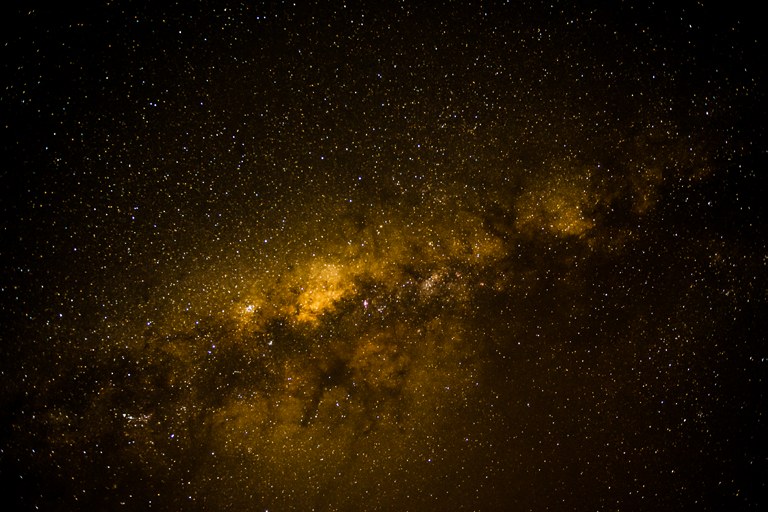
Dallas: Yeah, you definitely don’t want to become a lion dinner! So yes, we got off the Land Rover, and we walked a little bit to — I can’t remember what the name of the tree was that we photographed — but we did painting with light with this tree and the stars in the distance, and got some really fantastic photographs of the Milky Way. So the opportunities for taking photos are not just limited to the animals; it’s a beautiful landscape, the light is wonderful the time of year that we go, and it’s really a great place to exercise your vision.
DP: So what time of year is it that you find best?
Dallas: We try to go closer to the winter months now, because that’s when the bush is at its thinnest. What would normally happen is that if you’re going in the summertime, you’ll find that the African bush gets really thick.
DP: So you’re in the Southern Hemisphere, so for most of our readers in the Northern, that would mean they’d want to go in their Summer.
Dallas: That’s right; you just invert it. The last couple of trips we’ve done in October, which is the start of the rainy season. Now the trouble with that is that the rainy season means that you can’t really go off-road because they don’t like to drive the vehicles… or rather they’re not allowed to drive off-road because after a rain it tends to mess things up a bit. So we’ve now set up a trip this year in the first week of August which is going to be a completely different experience than the October trips that we’ve done in the past. The tracking is easier because the bush is less thick; it’s easier to spot animals; and also, obviously the off-road aspect is a lot more achievable in the Winter months than it is in the Summer months.
DP: Well that’s great! So let’s say I want to go this year — I don’t know if you have all your spots booked as yet, but let’s say you didn’t — how much am I looking at in terms of price?
Dallas: Well we price everything in South African Rand, because obviously the providers that we use price themselves in Rand. The trip that we’re planning for August, I believe the figure is 40,000 Rand which if I can quickly convert for you, would be just under $4500 USD, and that’s per week.
DP: So that includes your accommodation and meals and such?
Dallas: That would include everything except your airfare out here. So once you step off the airplane in Johannesburg, until the time you get back on the airplane, those costs are all included. Obviously, personal things like laundry, and telephone calls if you haven’t got a roaming cell phone, wouldn’t be included, but all your accommodation, your drinks, your meals, your transfers to and from…
DP: So alcohol as well?
Dallas: Certain alcohol, yes. The locally manufactured alcoholic drinks would be available to you, and that would be included in the price. That’s the wine, beers, spirits… obviously your Johnny Walker Blue Label is not included in that…
DP: No, but you can’t go wrong with South African wine! So, switching gears a little, did you ever think that you’d end up in the photography business?
Dallas: No, I didn’t. I’ve always seen myself as being more of a writer. So what I’m finding now is that I’m writing about photography, which is kind of interesting… at least I’ve got an angle.
DP: So I guess it took you by a bit of a surprise that you’re actually doing this… and now you’re in the travel business as well! What do you think of the whole transition? What was it that you were doing in advance of this?
Dallas: Initially, when I first started working, I was employed in a bank. I worked in the bank for 12 years; but during those 12 years I did a lot of different things. I started off on the clerical side; then I moved to the IT side, where I got involved in programming and learning a little bit more about information technology; but being the kind of person that I am, one thing is never really going to be enough for me. I like to sort of spread myself a little bit thinner over a lot of different subject matters. So I got involved in marketing; and if I could use one word to describe what I’m like, it would be that I’m a marketer. That’s kind of the way I see the world. So yeah, I worked at the bank for 12 years; and towards the end of the 12 years, the bank merged with another bank and the corporate culture changed completely. This was kind of my cue to get out of the industry at that time, which I did.
I took a retrenchment package in 2001, and meandered around doing all sorts of arbitrary stuff which didn’t really help much. That’s when I first became involved in professional photography. I started taking a few commissions and got involved in sports photography at that time. Then the financial aspect of it became quite pressurized. I had a young family, and trying to rely on sports photography to feed a young family that were used to having an executive income from a bank didn’t quite pan out the way I’d planned. So I then got involved in manufacturing. My brother had a business in manufacturing concrete; and they started making concrete paving, and invited me to come and help market it, being the marketer that I am. I did that for five years, and then my brother sold that company and emigrated to Australia. So since then I’ve been doing more photography and website stuff than ever before, and that’s pretty much where I am right now.
DP: Hmm. Now you said that it was difficult with a young family, being a sports photographer… what is it that you think about the state of photography as an industry as it stands today?
Dallas: It’s constantly in a state of flux. I don’t think there’s any kind of formula that you can say works these days for very long. There’s always innovations; there’s always people coming up with different business plans, and different ideas. The sports side of things obviously required some huge financial input in terms of equipment; and that equipment is also always changing, specifically in the bodies. When I first started, I had a D30 which was a Canon believe it or not, and that is what we were using, but within the space of two or three years there’d been the D60, then the 10D, then a series of 1D models… and the clients were all demanding that everybody have the latest camera. Unfortunately, if you didn’t have the money for those cameras, you couldn’t really afford or justify those costs, you weren’t going to be working. Then you were also looking at 400mm lenses, which in this country cost an absolute fortune…
DP: In this country too, trust me!
Dallas: Well I’m glad we’re not alone in that respect! But yeah, I love sports photography, but making a living at it was not something that was viable for me at that time. I’ve tended to shy away from it, and what I do now is concentrate on corporate photography. That seems to be where the money is these days… the corporates are prepared to pay the prices, so that’s what I’m sticking to.
DP: So what are you doing… headshots and portraiture primarily?
Dallas: It’s varied. I do a bit of corporate portraiture, I’ve done a few reports for companies as well. A lot of the time, what I do is corporate events. So for instance, they have conferences that they need documented, I’ll go and do that over two or three days. It’s not really the kind of photography that excites photographers; but it pays the bills, and obviously, that’s kind of an important aspect.
DP: Well for sure; and as you know this interview is for the Photopreneur column in the magazine, and it seems everybody that I’ve interviewed thus far for this column, that’s been successful in photography lately has been doing a whole bunch of different things to make ends meet. Do you think that’s pretty much a prerequisite to be successful these days?
Dallas: You have to be adaptable. If you’re not adapting, you’re dying. That’s just the sad truth of it. I speak with a lot of photographers on NikonGear.com as well that are professionals, and they say the same thing. With regards to making a living out of stock photography in the past — making really good money — the microstock industry has just killed that. So they’ve had to adapt and do other things as well. A lot of the guys that I speak with have moved away from doing specifically stock photography to doing other projects as well. For me the worst thing would be to do something that you’re not really happy with doing; but at the same time you have to be realistic.
DP: So what keeps you enthusiastic about the industry then?
Dallas: Um…
DP: Or are you?
Dallas: I am; but you know, Ray, it’s interesting because there’s nothing that takes the gloss away from photography faster than actually having to make a living out of it.
DP: Oh, I know! Why do you think I’m doing this?!
Dallas: So yeah, I think we’re on the same page with that one. Generally what interests me is that I love great landscape imagery. If I could do one thing for the rest of my life, it would be to travel around the world taking photographs of landscapes at the right times of day. I really envy people like David Duchemin, who’s done a fantastic job of doing what he does. He’s really one of the photographers that I look up to — and specifically on the entrepreneurial side as well. His publishing business that he’s got is doing really well for him; and he’s one of the guys that I have on RSS feed. In fact, a lot of his images are desktop wallpapers on my computers.
DP: So, let’s say you were talking to an aspiring young photographer… what type of advice would you give him?
Dallas: Don’t become a photographer! Seriously though, I do teach a few young people as well, and they come to me for advice as well. I think the most important thing for any young person wanting to get involved in photography is that they need to have a bit of business sense, and they need to have a plan. Without a plan, you don’t really stand much of a chance of getting anything out of this business. There’s an old saying that ‘if you fail to plan, you plan to fail’, and I don’t think there’s been truer words spoken, and specifically for young people wanting to get into photography these days: get yourself a business plan, and strategize on what you want to do and what you want to get out of it.
DP: I see…
Dallas: For me, photography is all about the time; and the value of your life is not really measured in terms of your bank balances, it’s measured in terms of the hours you have for yourself and your family. If you can balance making an income with photography, and getting the maximum out of your personal life, then I think you’ve succeeded. It doesn’t necessarily mean that you have a Ferrari in your garage, or that you spend 6 months of the year travelling the world; what’s important is actually feeling success.