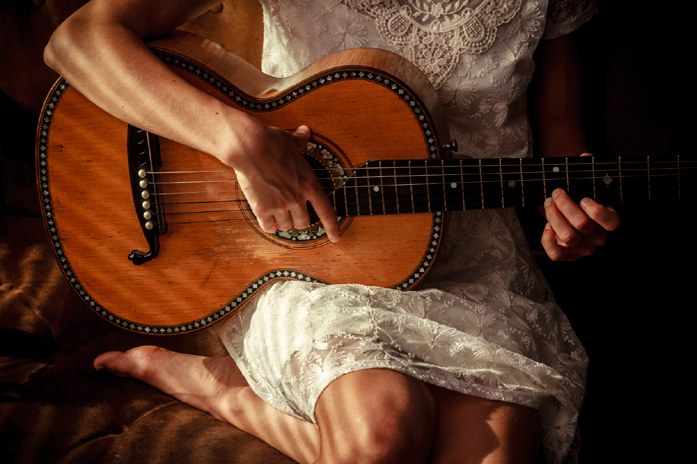
Everyone who has ever dreamed of setting up their own studio soon discovers, things can get really expensive, really fast! Certainly there’s the inevitable cost of lights, background stands, reflectors, and C-Stands to take into account — and you generally don’t want to skimp too much on these (though foamcore does indeed work well in a pinch as a cheap alternative to reflectors). However, this only covers the barest of essentials… what about the rest of it? Are you going to go out and spend over a hundred dollars on a high-end posing stool? Still hundreds more on high quality muslin? Are these really going to add enough value to your images to justify the expense?
Ultimately, as you progress, the answer to these questions is yes, as you become more interested in gaining smaller improvements in your photographic output; but as you are getting started, should you spring for the top-of-the-line? We don’t think so.
Backgrounds
When you’re just getting started there are a really only two backgrounds you need to buy: black, and white. Rolls of paper in such colours are quite inexpensive, and provide enough flexibility in shooting scenarios which require a background be utilized. A possible addition to this list would be Chromakey, should you be interested in compositing, as this colour is needed for the background extraction process used by many software packages which specialize in this operation.
Other background materials you can procure inexpensively, or indeed free of charge, include heavy window drapes, bedspreads, quilts… anything (preferably without visible seams) with enough density to disallow the transmission of light through its surface, while being non-reflective in nature. You’d be surprised at the interesting effects you can achieve with these items by using a shallow depth of field to capture your subject, yet render the background as a pleasant blur.
Another cool material you can employ in this capacity is translucent corrugated plastic — inexpensively available from nearly any building supply store. Take a gelled strobe or hot light or two and place them behind the backdrop to lend a space-age aspect to your scene. You may even want to spray water on it to create a shower-like environment.
Light Modifiers
Gobos (their name derived from ‘goes between optics’), are extremely valuable in providing style and flair to your images, and may be easily and inexpensively constructed by the photographer themselves. Utilizing cardboard, foamcore, bristol board, or whatever opaque and easy to work with material you have at hand, you may create a variety of gobos that allow you to enhance the mood of your shot by adding, for example, the shadow of a window frame, horizontal blinds, or other intricate patterns of light falling upon your subject. One thing you should be aware of here however, is the risk posed by the heat emanating from lights as you move your homemade gobo closer to them, depending on the effect you are attempting to achieve. There’s a reason professional gobos are made primarily of metal… and that’s it.
Props
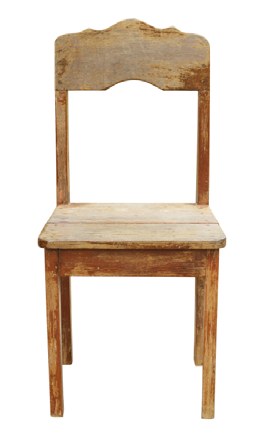
One of the main issues in creating a good performance from a studio subject (unless they are a professional model) don’t know what to do with themselves in front of a camera in this somewhat formal setting. While we covered this topic extensively in our ‘Working With Models’ issue to be found in Volume III, one of the surest ways to break the tension and provide a focal point for action is to provide your model with a prop. Fortunately, props are also one of the least expensive and most impactful additions one can make to their studio. So what kinds of things should you be looking for?
Well, first let’s define the word. A ‘prop’ is actually short for ‘property’, and is considered to be any movable object on the stage or, in the photographer’s case, studio set. Let’s start with the most basic of these which enables a wide variety of poses and is pretty much indispensable — the seat. Instead of buying yourself an expensive posing stool however, why not pick up some old wooden chairs from a garage sale or flea market? They have more character and allow for shots with varying action and draped articles you wouldn’t be able to get from a standard stool.
Yet another item which affords a great deal of posing opportunity is, of course, the table. What you want here is something inexpensive, portable and lightweight, which stores away in a convenient manner when you’re not using it — a card table. As you are able to employ a cloth and additional props to make this platform appear any way you wish… from picnic through 5 star restaurant, the quality of the table, beyond its basic sturdiness, is unimportant. As you’ll often be shooting crops in the studio anyway, the small size of the table is irrelevant, and you don’t want it getting in the way of your lighting setup anyway. Again, these items are readily available for next to nothing at garage sales and flea markets everywhere.
As mentioned, it’s tough getting a studio neophyte to relax and provide their best, given their unfamiliarity with the situation and gear. One of the simplest ways to break the tension and reveal your subject’s true personality is to inject a little humour into the situation… and one of the best methods to accomplish this is via props. Hats, oversized thrift shop clothing, and non-prescription glasses are an easy solution here, and can progress from outright silly to subtly, depending on how you play it. Crazy things like inflatable pool toys and novelty boxes are cheap, yet surprisingly effective at opening your subject up and preparing the road for more serious work once a certain level of rapport with you has been established.
Other props you may consider using can be things you have around the house already anyway: umbrellas, scarves, musical instruments, other cameras, plants, candles, wine bottles, whiskey glasses, toys, books… you name it. If it’s something a model can interact with, pose next to, or it assists in creating the tone you want to project in the image, it’s fair game.
So you see, you needn’t spend a ton of money building ‘the perfect’ studio, as it’s more about generating a positive environment for capturing great images than having a pristine space filled with the latest gear. In photography, as with most art, personality wins over cold precision every time. Your space should reflect you, and allow your model the freedom to be themselves within it.