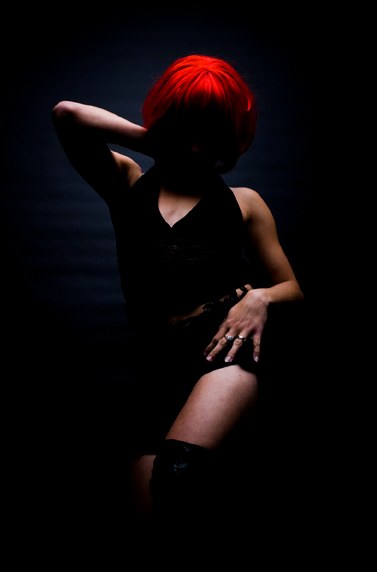
There comes a time in most photographers’ lives when shooting candids of friends and family, still life, landscapes, and the neighbourhood squirrel loses its allure. For many, the answer to photographic ennui is working with live models in a controlled setting — be it the studio, or a location shoot. Few photographic situations generate the same level of engagement, and inspire as much creativity as model shoots; so it’s easy to see why so many photographers are drawn to them. However, this path isn’t the easiest to tread; and there are definitely some tips that will help ease your transition into this new and exciting realm.
Where to Begin?
Not all of us regularly associate with ‘the beautiful people’, and as a result, mightn’t have ready access to ideal photographic subjects. After all, are you really going to ask Aunt Mabel to pose in her bikini in order that you might gain some portfolio-worthy imagery for your Glamour section? Probably not. So, what to do?
Fortunately, as with most things these days, the Internet has your answer. There are several sites specifically dedicated to connecting photographers with models — from the aspiring to professional in both categories. Probably the largest among these is ModelMayhem.com. This site enables the user to search for models in a specific geographical location, and refine your query by a range of variables including gender, compensation requirement, hair and eye colour, measurements, types of shoot, and so on. With around 3/4 of a million members, you’ll be surprised at just how many you’ll find around you!
If you’re just starting out, you may discover that working with new models is probably the way to go. Not only will they likely be more patient with you as you fumble through your initial shoots (and fumble you will), but they will often agree to exchange their time for prints and digital copies of your shoot to use in their portfolios. In fact, ModelMayhem.com allows you to search specifically on this criteria. Additionally, the site allows you to find area makeup artists, hair stylists, body painters, clothing designers, and event planners — among many others.
On With the Show
Ok, so you’ve found a model and have scheduled a shoot, what now? The first thing to keep in mind is be prepared! Don’t waste your model’s time setting up lights and fiddling around with backgrounds and reflectors etc.; know what you want to capture in the session, and prepare accordingly. If you haven’t mastered basic posing, spend some time researching in advance. There’s plenty of source material to be found in books or on the Internet. Learn exactly what you want to achieve, and be prepared to explain that to your subject.
Spend some time with your model before you begin shooting, clarifying and reinforcing what your objectives are for the session (you should have already briefly explained these within the context of your initial contact), and ask whether they have any questions about what you’re proposing to capture. Don’t try to come off as a seasoned pro if this is one of your initial attempts at working with models. Being honest in this regard is key, as otherwise you are going to look like a jackass — inexperience shows, even to those who are inexperienced themselves. Following these guidelines will help establish rapport and trust — ultimately leading to better photographs, as your model will be more relaxed and poses will seem less forced.
Further, provide a private area where your model may attend to wardrobe changes, hair and makeup touchups, and so forth, ensuring you show them where everything is. If you aren’t employing a makeup artist and hair stylist, don’t assume your model will have thought to bring along items required to touchup or alter their look. Inform them in advance of what you need them to supply. It’s a good idea to prepare for contingencies and have some basic hair and makeup products on-hand should your model be forgetful.
Action!…?
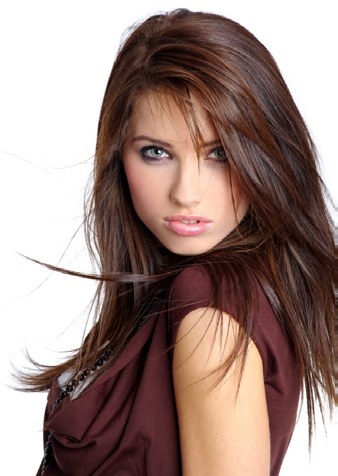
So now your model is standing in front of the lens and you’re all ready to go — do you shout ‘action’ and let the magic begin? No. Unless you’re shooting a supermodel who is only down for giving you a few practiced moves from their repertoire (and if you are, why are you wasting your time reading this article?!), your subject needs direction.
Establish the parameters of the relationship right away. Certainly, what is produced at the end of the day is the result of a collaborative effort between you and the model; however, you are in charge. Don’t expect your model to put on a performance without being told what exactly it is you are looking for. The experienced subject will more ably provide you with flattering poses, transitioning between them with ease; while those less so, require specificity, and may not be as cognizant of how best to showcase their talent within the context of your shoot. So take charge — not in an abrasive or domineering manner, but firmly, and with a smile.
Often it is helpful to mirror what it is you are looking for from your model in an effort to coax the best from your subject. So, if you want broad smiles, reflect that in your demeanour; should you require a more serious expression, ensure the one on your face represents that. Your model will subconsciously pick up on these cues and their output will be stronger, and more in line with your desired result.
Constantly provide feedback (beyond what you’re asking of them in terms of poses) as the shoot progresses: ‘that’s great!, a little bigger, that’s perfect — give me some more of that’, and so on. Models, especially new ones, need to feel that they’re rising to the occasion; and your feedback will not only move the process along, but result in a significantly better performance from your subject.
The Big Question
Sometimes (actually quite often with new models), you’ll find that despite your best efforts at verbally communicating a desired pose, it just isn’t getting across. Seemingly, the easiest solution to this dilemma would be to simply physically move the model into the correct position; however, this may prove problematic. There are many advocates of the ‘Never Touch the Model!’ approach to studio and location shoots; so should you subscribe to this philosophy? As with most things in life, situations are seldom so black and white as to apply blanket maxims to them. After all, in a studio situation, time is very often money, and if yours is being wasted, you need to rectify that difficulty as expeditiously as possible. So let’s just say, ‘it depends’.
Ideally, you mightn’t have to physically interact with your subject, but how often are conditions ideal? The trick is knowing how and when to do it. If you’ve spent over a minute trying to verbally indicate your desired pose on more than one occasion during a shoot, it may be time to consider assisting the subject physically.
If you’ve established some rapport with your model, the touch barrier might be easier to transcend — ensure you’ve addressed this at the outset as much as possible. Approach them with a confident demeanour and simply ask ‘May I…?’ while indicating with your body language that you wish to reposition them. Their physical reaction will immediately let you know if it’s ok to proceed. Of course, if they say ‘no’, that’s it, and it’s time to pursue other options. However, even if they say ‘yes’, gauge whether to continue from their body language. If they appear to have a negative reaction to your request despite giving you permission, work to reassure them, and apologize for not being able to explain what you want from them more effectively.
Take the responsibility for the situation, not dumping the communication failure on them. The last thing you want your model to feel is self-conscious as a result of not being successful in responding to your requests, as this will be reflected in the subsequent shots. Breaking the touch barrier is far easier for female photographers than their male counterparts; however, adhering to the above will hopefully ease the transition should the situation demand. Once you’ve moved beyond this point, touch can actually enhance rapport in many cases… so long as you don’t move from being perceived as acting professionally to creepy (often a fine line).
A New World
As you gain familiarity and proficiency in working with models, you’ll either find it an incredibly exciting and fulfilling experience, or a tedious and stressful occupation, depending on the kind of person you are — live model photography isn’t for everyone. However, for those wired for it, entirely new realms are opened for discovery, and your journey will be filled with experiences you’ve yet to imagine. Time to take the first step…